Equinix • Enterprise Marketplace Platform • 2021–2022
Marketplace Discovery Platform
Designing a B2B marketplace experience that helps enterprise customers discover partners, evaluate services and initiate business connections within the Equinix ecosystem.
Overview
Marketplace was originally positioned as a platform for customers to discover and connect with service providers within the Equinix ecosystem. However, despite its name, the experience functioned more like an informational directory rather than a true marketplace experience.
The platform struggled with low external engagement, unclear value proposition and fragmented discovery workflows. Internal teams primarily used Marketplace as a sales and marketing tool, while external customer adoption remained limited.
As part of the reimagine initiative, I collaborated with researchers, designers and stakeholders to better understand user needs, identify gaps in the current experience and explore a clearer long-term vision for the platform.
My Role
UX Designer
Research synthesis
Workflow analysis
Interaction design
Wireframing and prototyping
Stakeholder collaboration
Concept development
The Challenge
The Marketplace experience lacked clarity in both purpose and usability.
Some of the recurring issues identified included:
overwhelming amounts of information
fragmented and unintuitive workflows
poor discoverability of relevant services
lack of contextual relevance for different user types
unclear end-to-end customer journey
The platform also served multiple user groups with very different goals, making it difficult to prioritise information and create a cohesive experience.
Marketplace Audit
User interviews and workshops were conducted with:
product marketing teams
solutions architects
product managers
stakeholders
existing enterprise customers
The research revealed several important insights.
Marketplace was difficult to learn and navigate
The interface exposed large amounts of information without clear prioritisation, making it difficult for users to understand where value existed or how to navigate efficiently.
Contextual relevance mattered
Users had very different business goals depending on their operational context, geography and expansion strategy. Generic recommendations often felt irrelevant and reduced engagement.
Self-service needed to coexist with relationship-driven workflows
While users valued self-service capabilities, trust and human relationships still played an important role in complex enterprise decision-making. The experience needed to support both independent exploration and relationship-based workflows.
One of the key learnings from the research was that Marketplace needed to evolve beyond being a static directory and instead become a more integrated discovery and recommendation experience
Research Synthesis
To better understand why Marketplace struggled with external adoption, I conducted an audit of the existing experience across discovery, navigation, recommendation and communication workflows.
The audit revealed several recurring issues:
fragmented workflows across standalone tools
low discoverability of relevant features
excessive information density
inconsistent navigation patterns
lack of contextual relevance for different user types
Many features were technically available, but users struggled to understand where value existed or how different tools connected within the overall experience.
Research & Insights
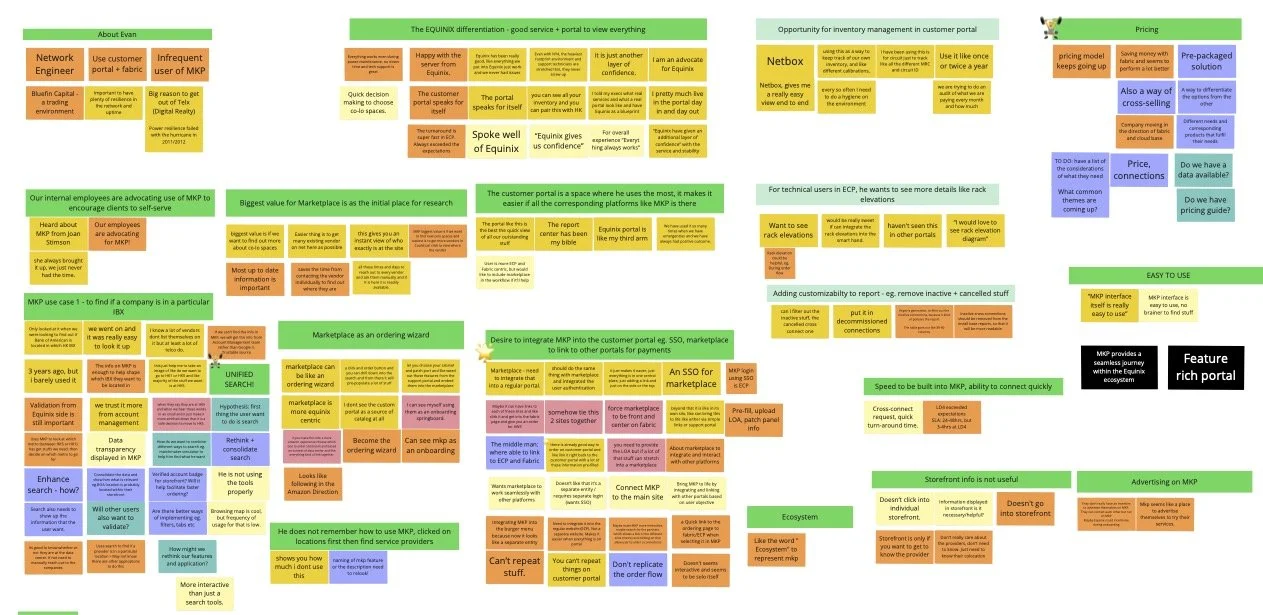
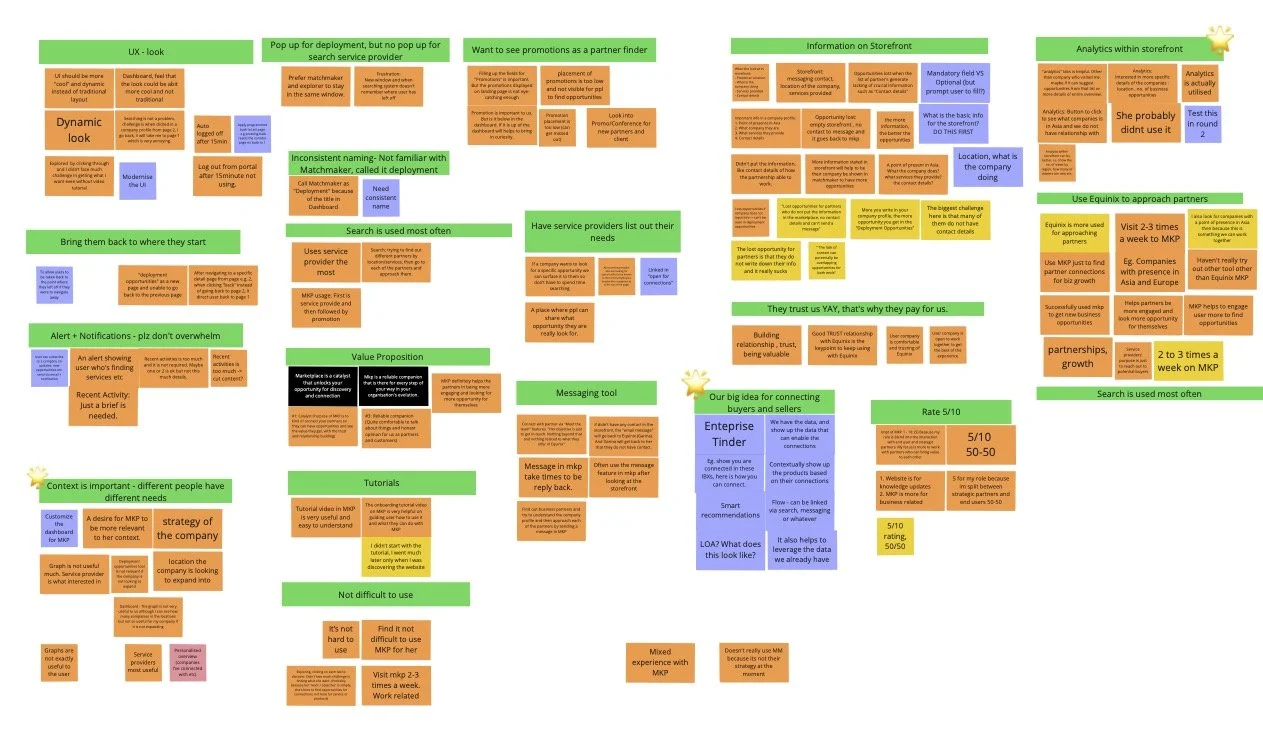
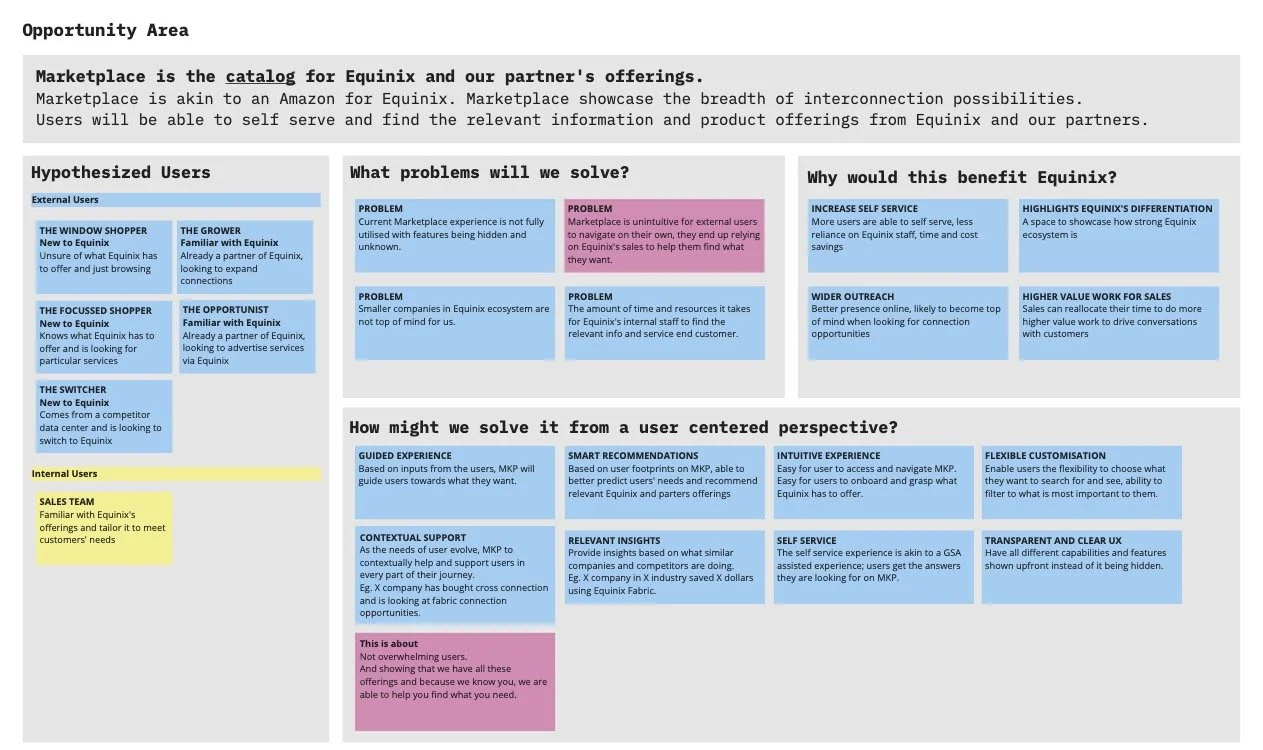
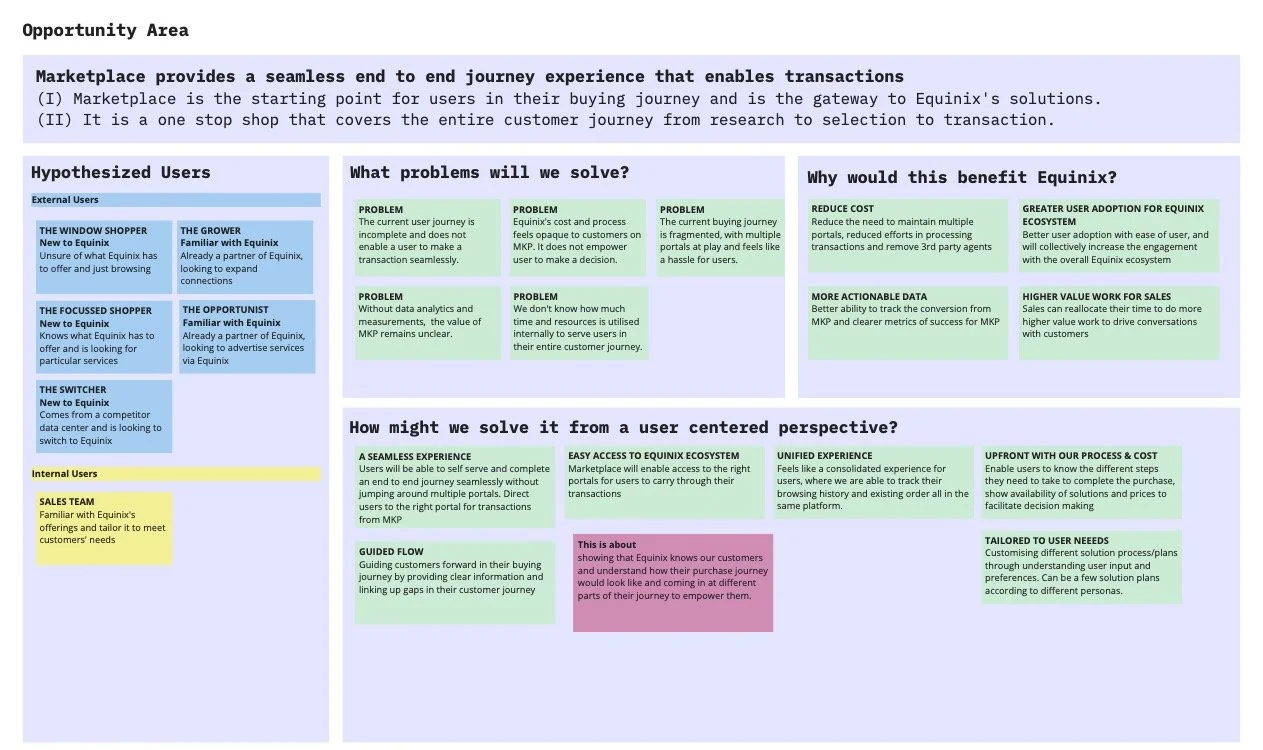
Interview findings from internal teams and enterprise customers were synthesised into recurring themes around discoverability, contextual relevance, self-service workflows and ecosystem integration.
The synthesis process helped uncover gaps between how Marketplace was intended to function and how users actually perceived and used the platform
Key Insights
Fragmented discovery workflows
Users struggled to navigate disconnected tools and identify relevant actions across the Marketplace experience. Important information and features were often difficult to discover due to fragmented workflows and poor information prioritisation.
Context mattered
Customer needs varied significantly depending on geography, business strategy and operational maturity. Generic recommendations often felt irrelevant because they lacked contextual relevance to individual customer goals.
Self-service needed to coexist with relationship-driven workflows
While users valued self-service capabilities, enterprise decision-making still relied heavily on trust and human relationships. The experience needed to support both independent exploration and relationship-based interactions.
Opportunity for a connected ecosystem experience
Customers expected Marketplace to integrate more seamlessly with the wider Equinix platform ecosystem rather than operate as a standalone tool. This highlighted opportunities for more connected end-to-end workflows across discovery, evaluation and transaction journeys.
Translating Insights into Product Direction
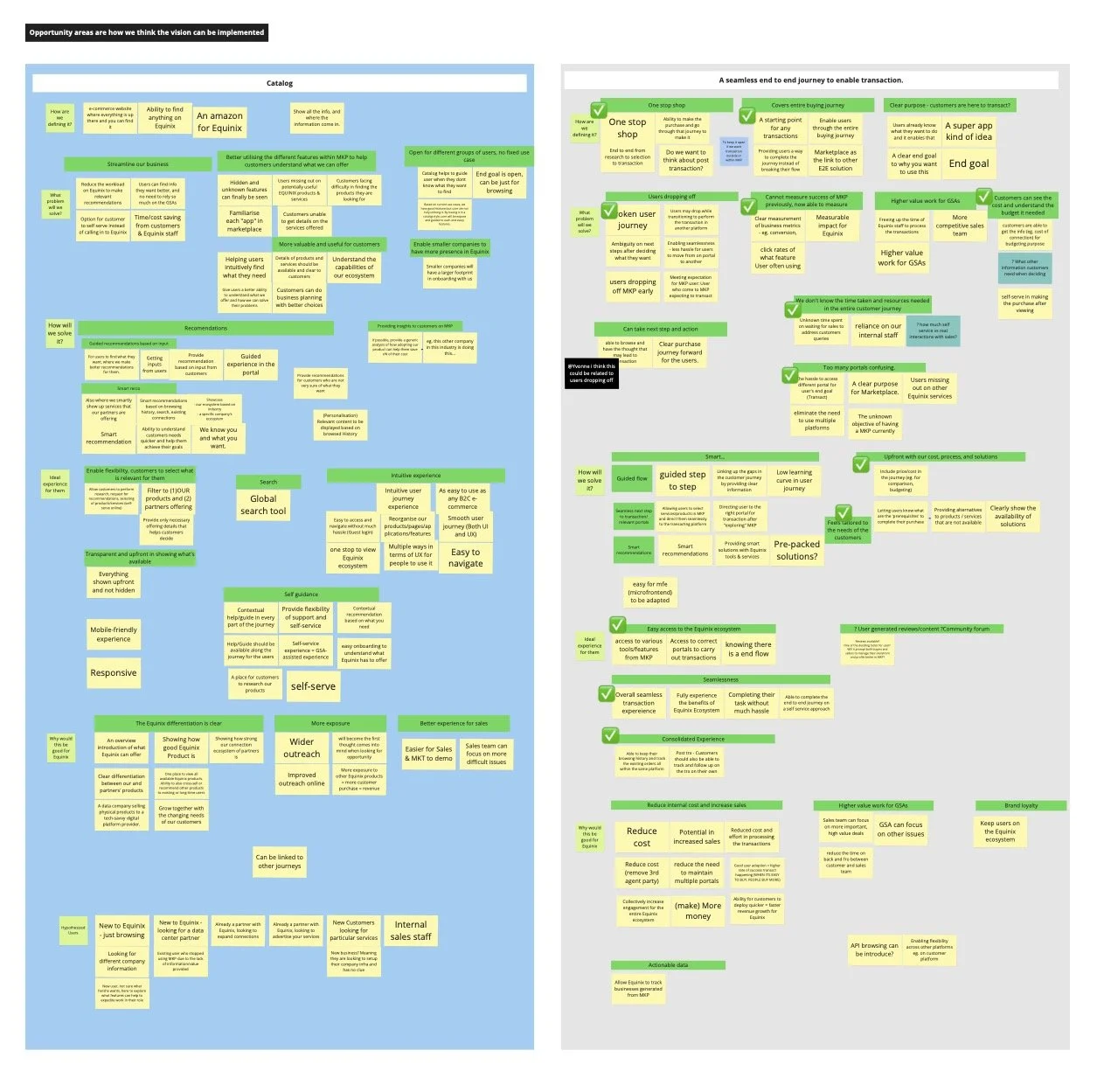
The research findings highlighted an opportunity to evolve Marketplace from a static directory experience into a more contextual, discovery-driven platform that better supports different enterprise workflows and customer needs.
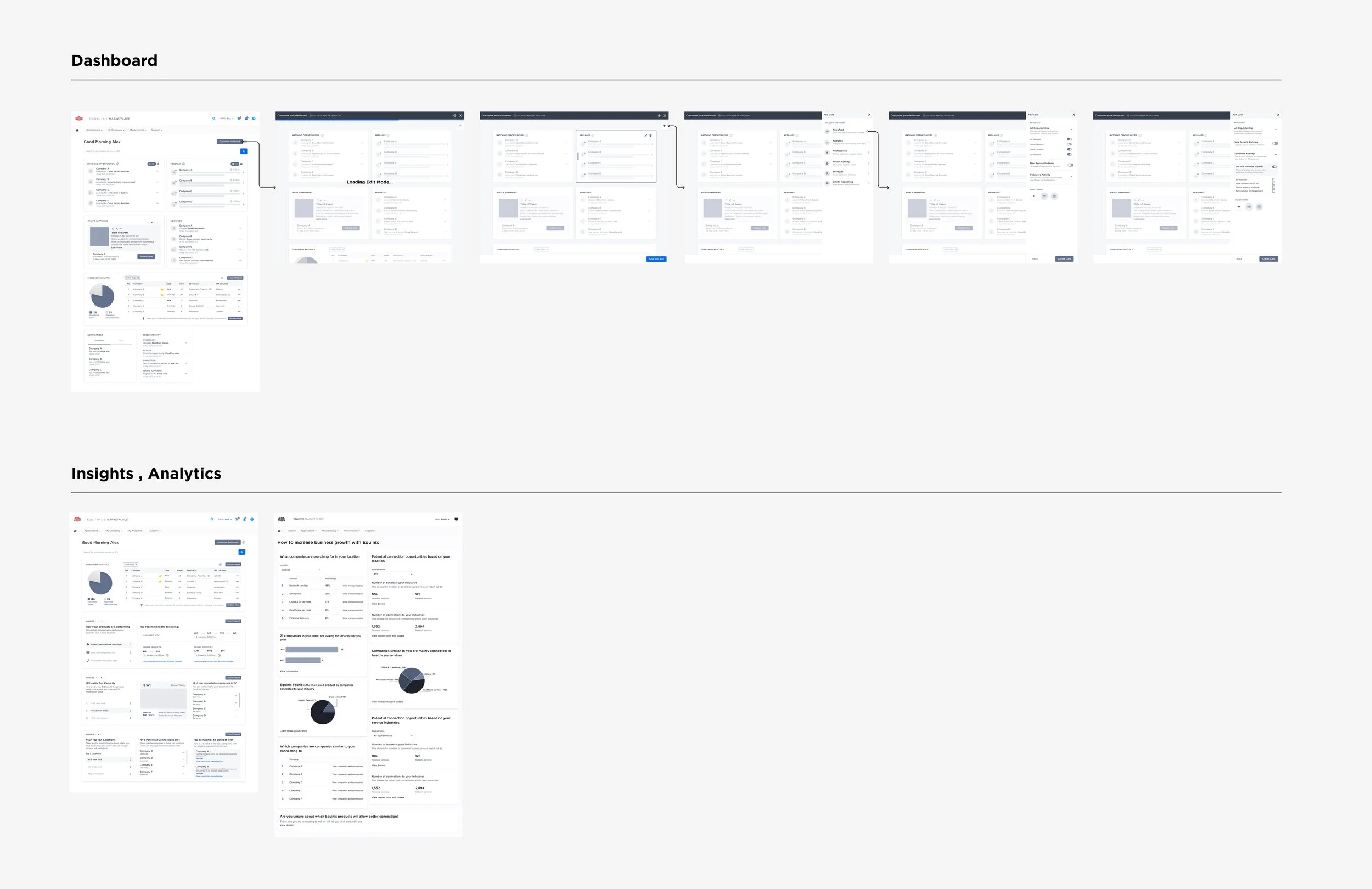
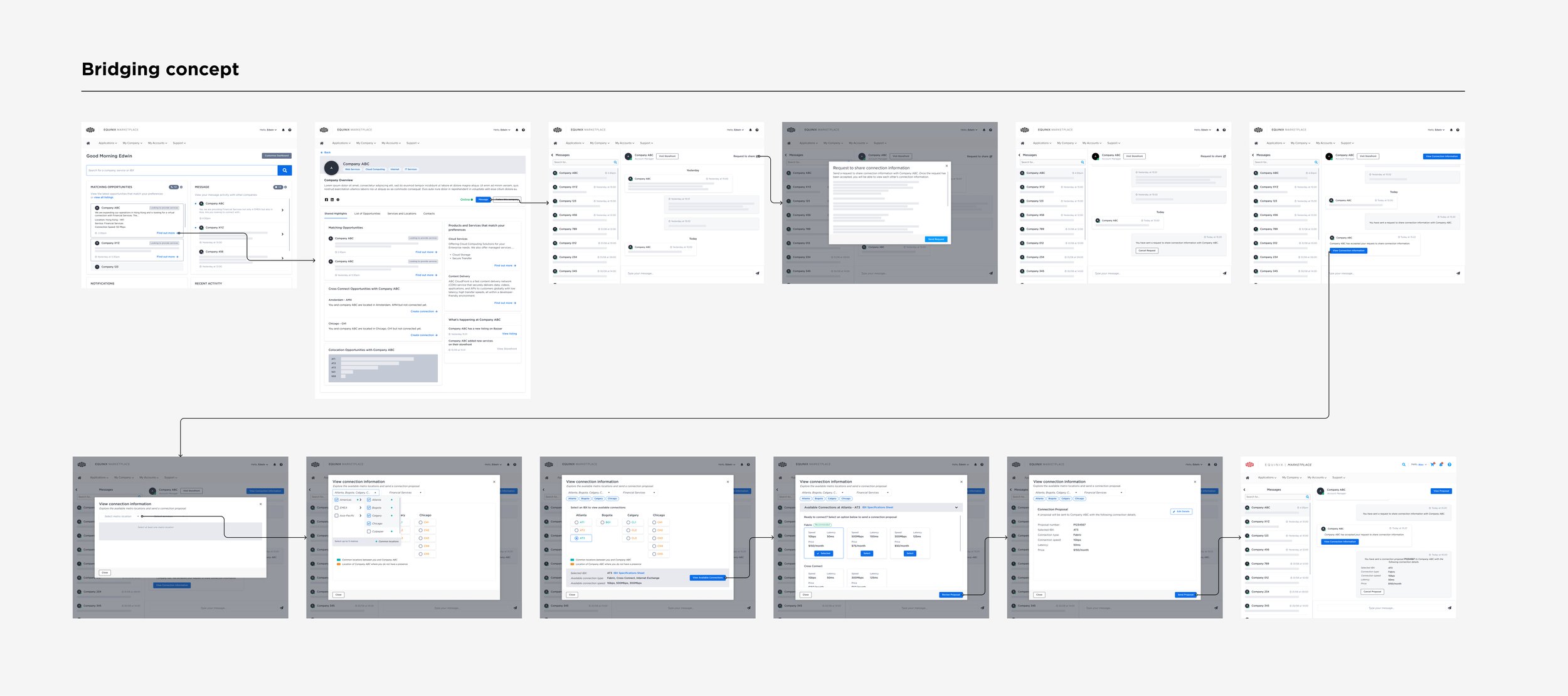
Several design directions were explored to improve discoverability, contextual relevance and end-to-end workflow continuity across the Marketplace experience.
Flexible discovery experience
Designed a dashboard experience that allowed users to prioritise information and modules relevant to their business context and goals.
Contextual recommendations
Explored recommendation concepts that surfaced relevant companies, products and opportunities based on factors such as geography, industry and connection capabilities.
Bridging discovery and transaction
Conceptualised workflows that supported the full journey from discovery and evaluation through to negotiation and eventual transaction across connected platforms.
Synthesised research findings
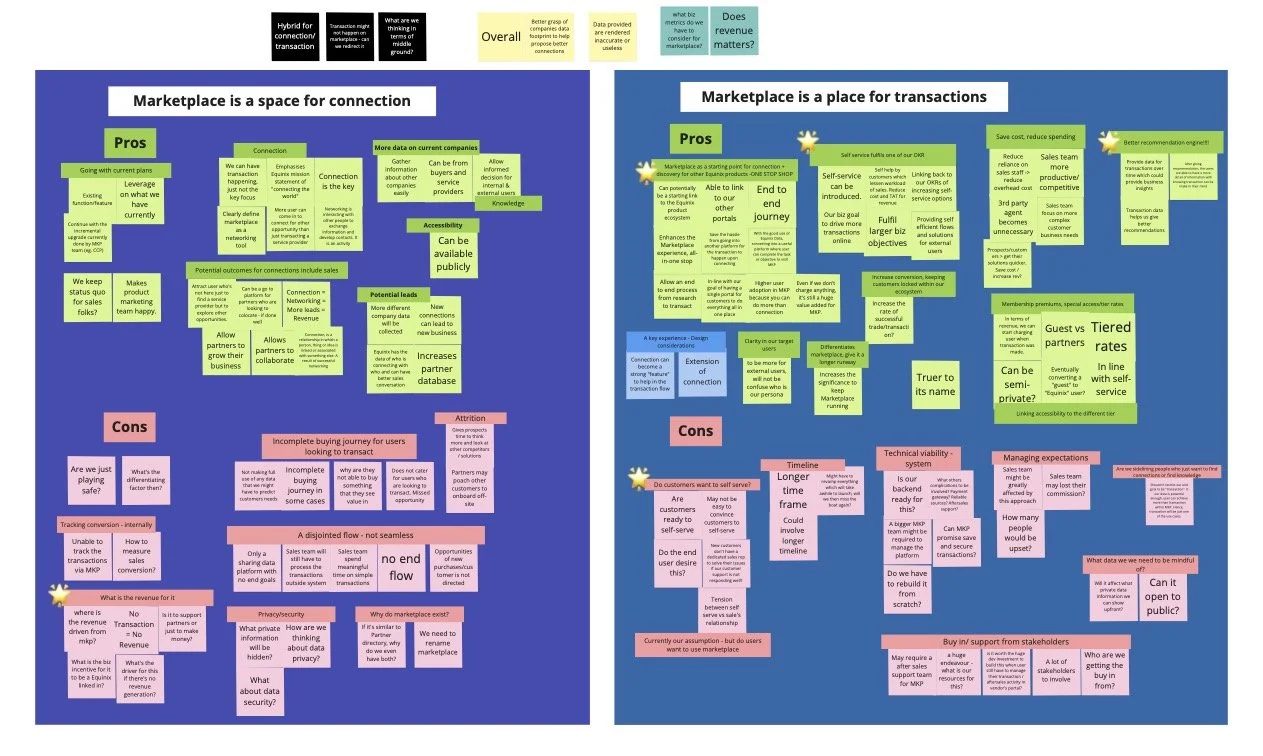
Conceptualised design concepts

Strategic Pivot
During the project, the Marketplace initiative became closely tied to Equinix’s broader North Star strategy focused on consolidating multiple portals into a unified customer platform.
As a result, the Marketplace direction evolved from being a standalone platform into a recommendation and discovery layer embedded across the wider customer journey.
This shifted the focus towards:
predictive recommendations
contextual product discovery
cross-sell and upsell opportunities
integrated end-to-end workflows across platforms
While the concepts were not formally user tested due to the strategic pivot, the project provided valuable insight into designing for large-scale platform ecosystems, evolving business strategy and complex enterprise workflows.
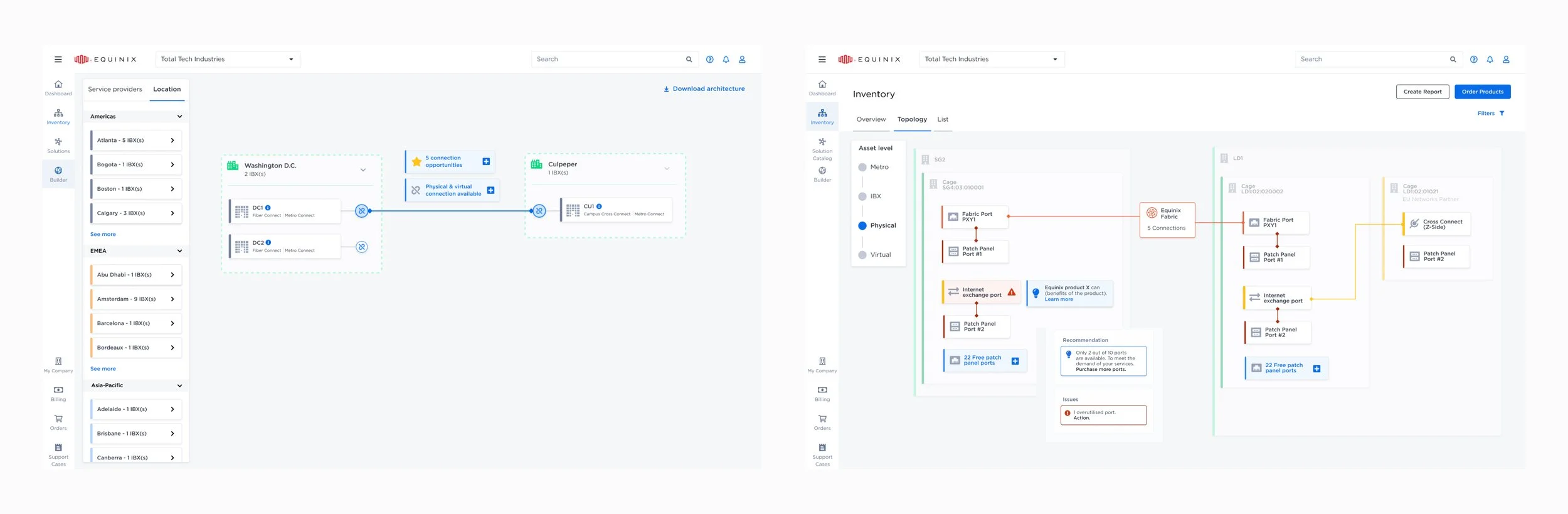
Connection and product recommendations from Marketplace surfaced as users build their architecture
Predictive recommendations that helps users plan in advance and forecast their business growth