Equinix • Enterprise Customer Portal • 2021–2023
Simplifying Enterprise Billing
Improving invoice transparency and reducing billing friction for enterprise customers managing large-scale finance operations.
Overview
The existing billing experience made it difficult for customers to search, interpret and manage invoices efficiently across accounts and services.
Large volumes of invoice data, fragmented billing documents and unclear support processes resulted in payment delays, billing disputes and operational inefficiencies.
As the lead designer on the project, I collaborated closely with product managers and user researchers to understand customer workflows, identify friction points and design a more transparent and self-service billing experience.
My Role
Lead UX Designer
User research
Workflow mapping
Interaction design
Stakeholder collaboration
User testing
Prototype design
Constraints
Large volumes of invoice and billing data
Complex organisational account structures
Multiple customer types with different operational workflows
Existing enterprise system dependencies and billing processes
The Challenge
Enterprise customers relied heavily on manual workflows to reconcile invoices across multiple accounts, billing agreements and sub-customers.
Some recurring pain points included:
difficulty aggregating invoice data
poor visibility into billing details
disconnected billing documents
slow dispute resolution workflows
heavy reliance on account managers for support
The complexity of the billing structure also meant that a single disputed invoice could create several months of downstream billing disputes and reconciliation work.
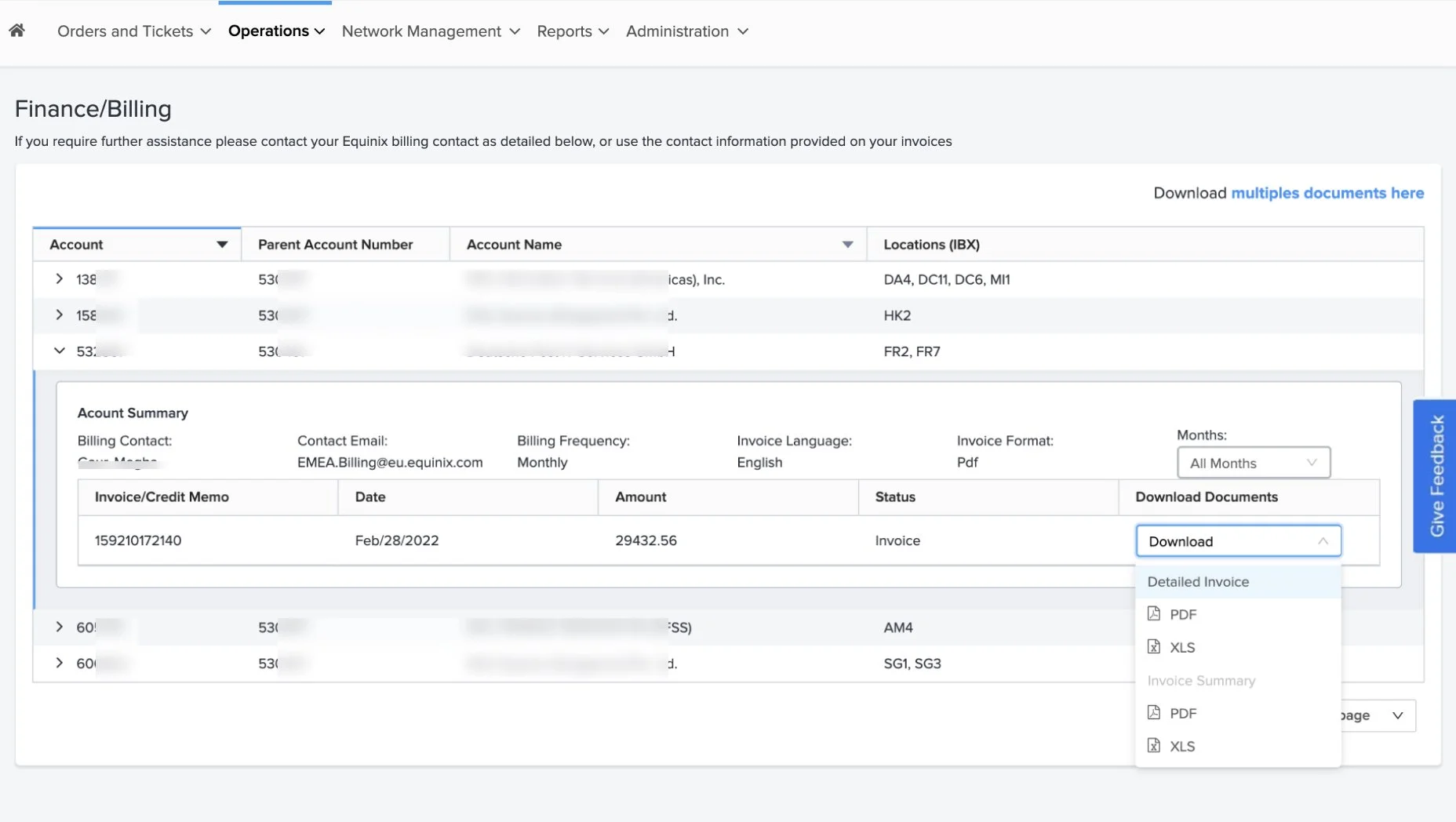
Billing portal before re-design
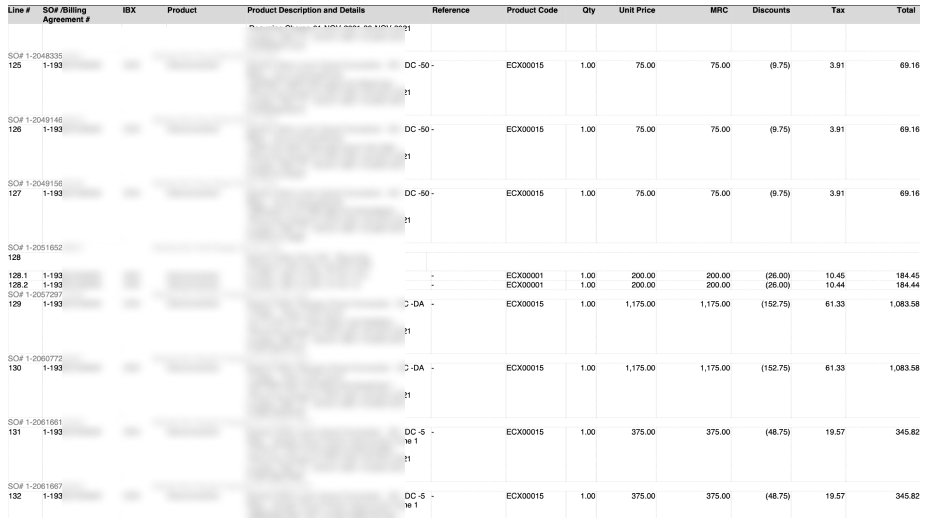
PDF invoice
Understanding Customer Workflows
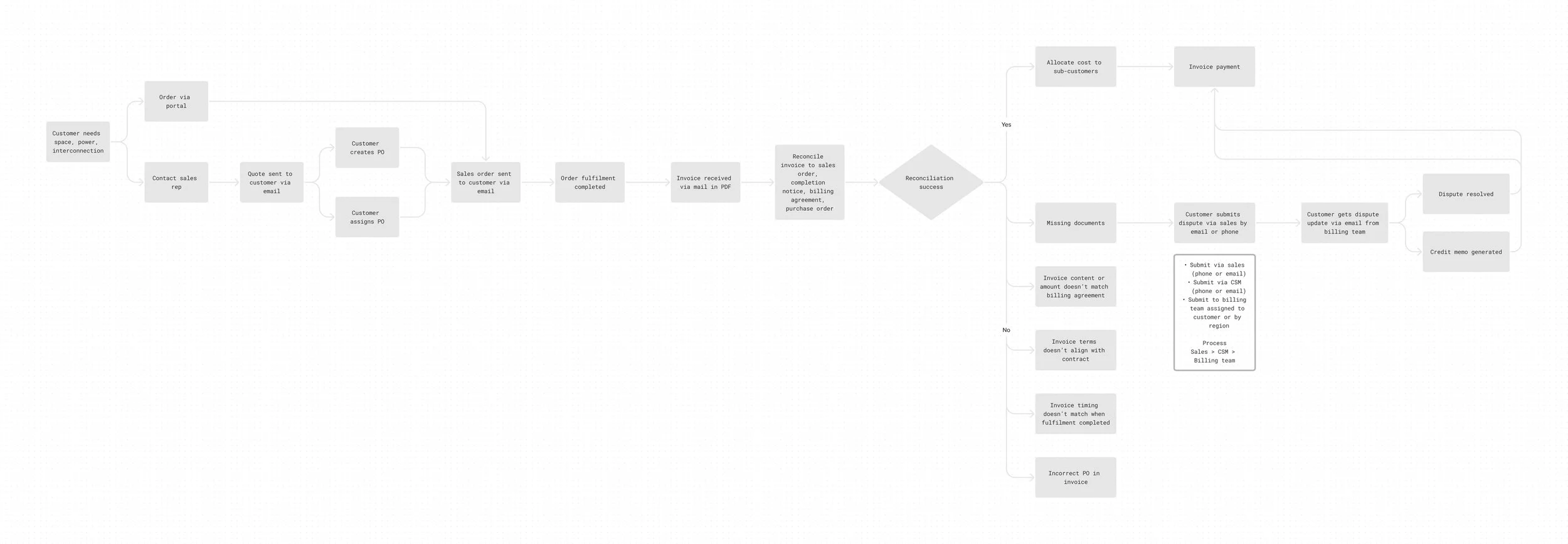
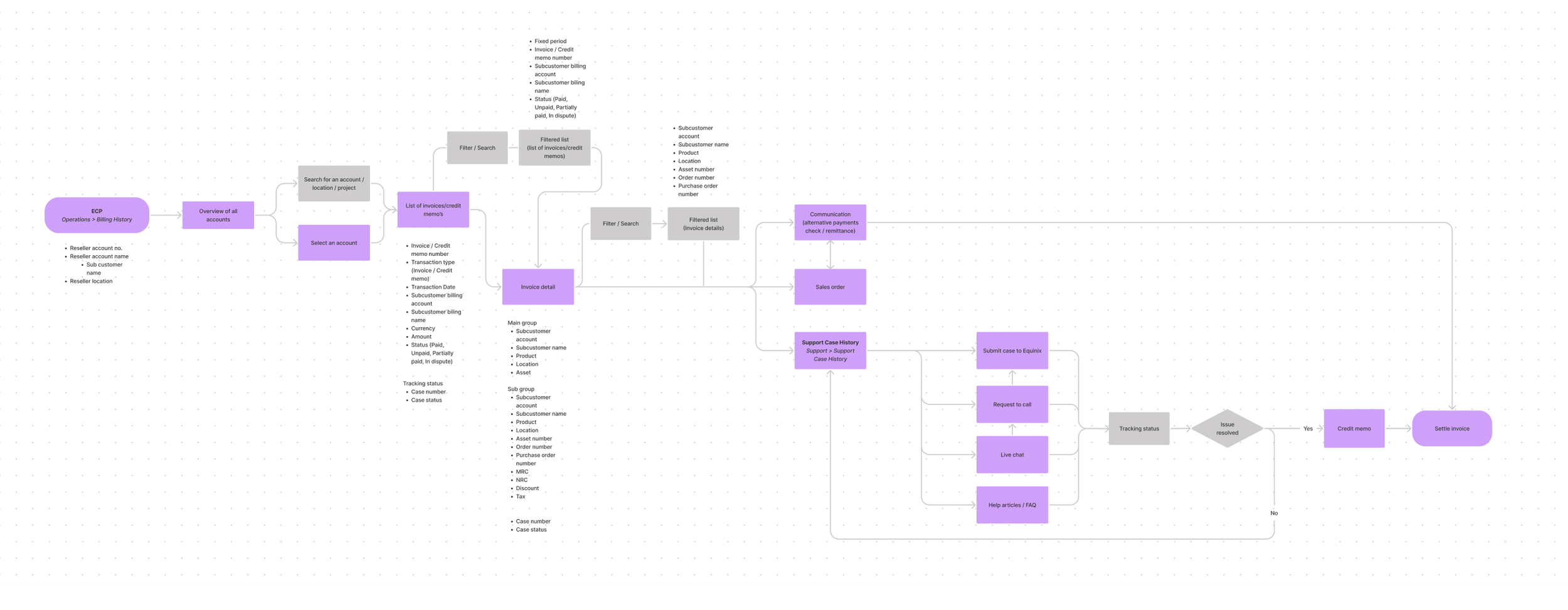
To better understand how customers managed billing operations, I worked with stakeholders to map:
the end-to-end billing reconciliation workflow
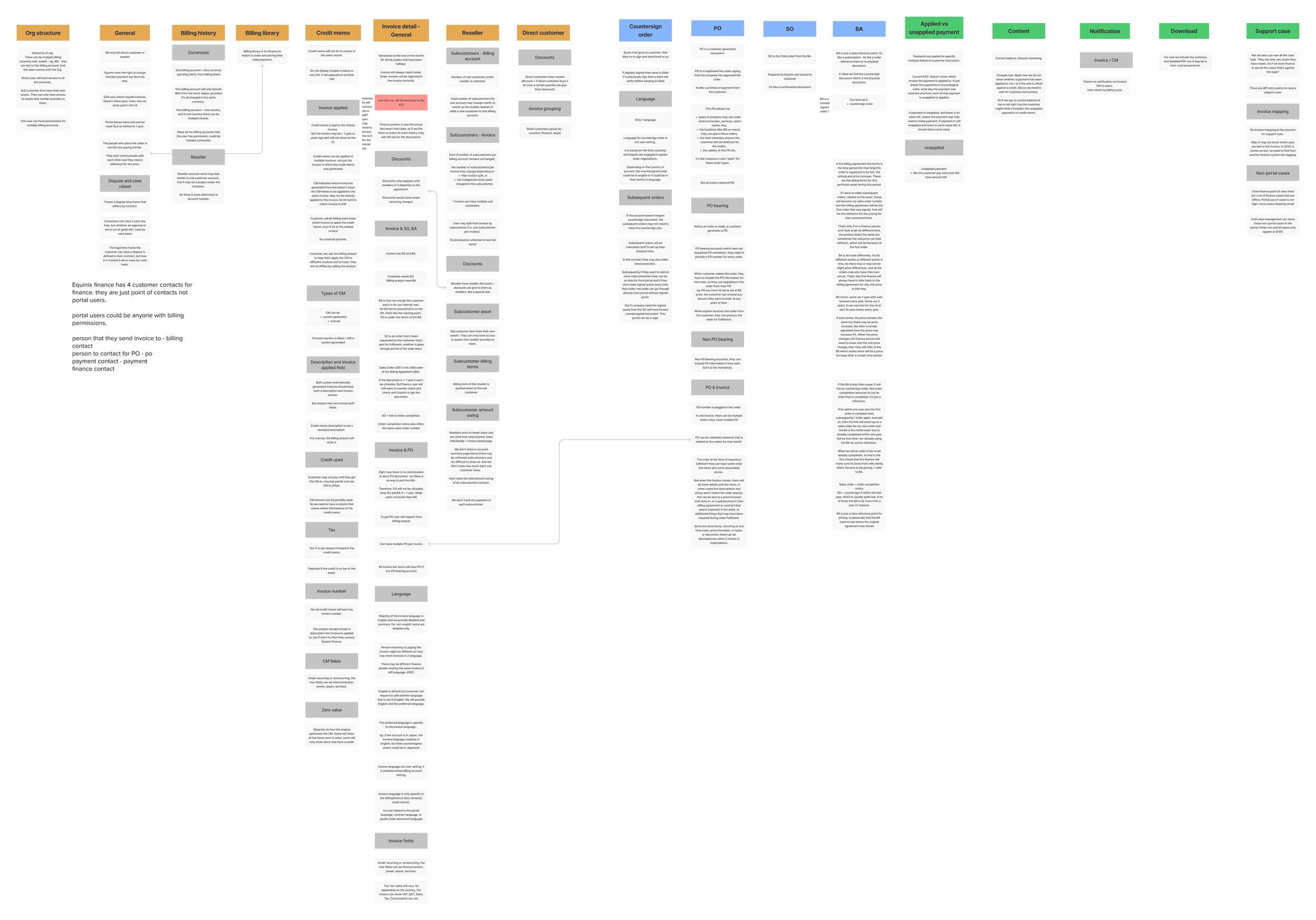
relationships between billing documents
organisational account structures
dispute escalation processes
customer support touchpoints
This helped identify opportunities to simplify invoice analysis, reduce context-switching and improve self-service capabilities.
Current user flow from purchase to payment
Mapping the objectives of the various documents and structure of organisational accounts
Key Design Decisions
Simplifying invoice analysis
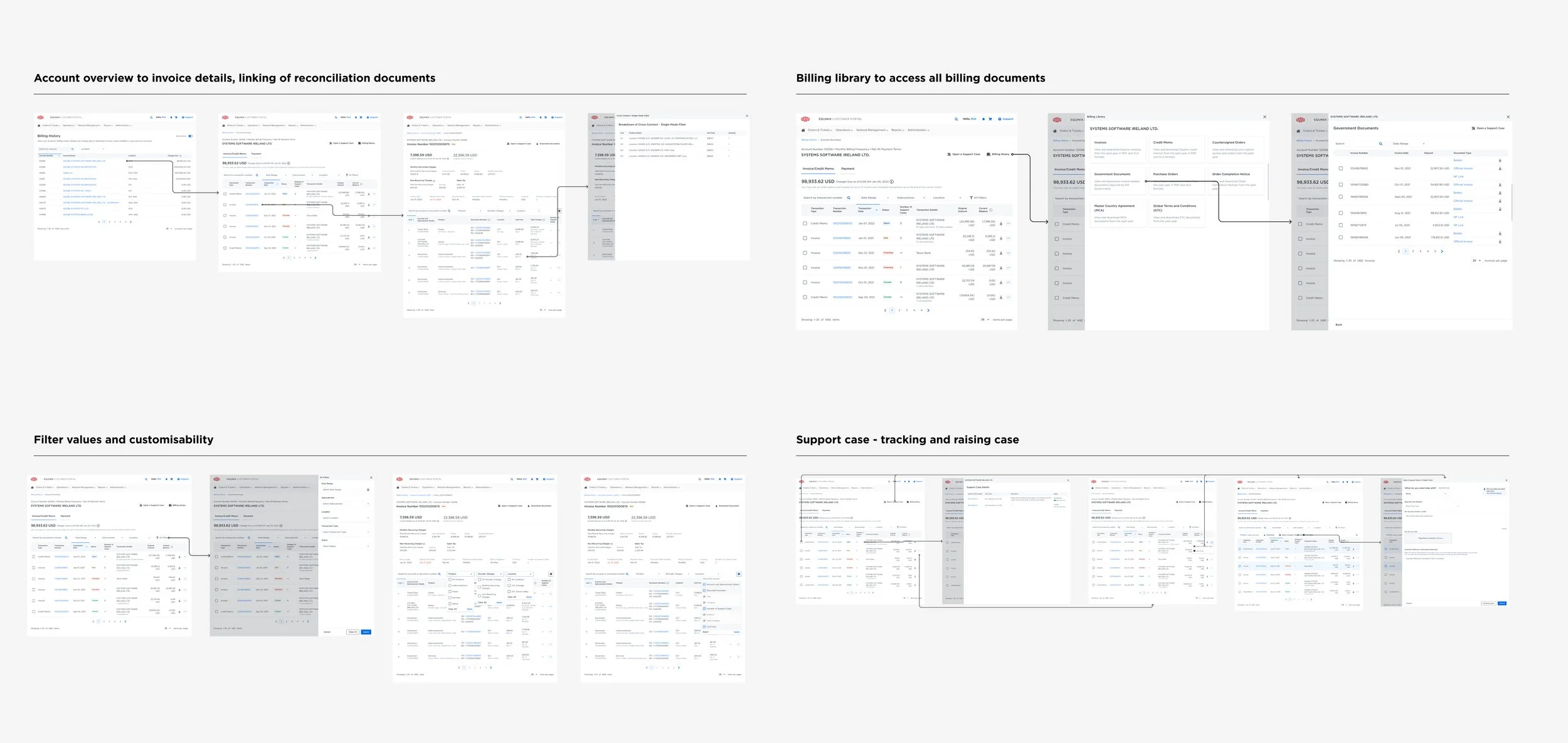
Designed filtering and search capabilities that allowed users to quickly aggregate and drill into invoice data based on different operational needs.
Supporting self-service workflows
Created a centralised billing experience where users could:
access related billing documents
track billing cases
raise disputes directly from invoice line items
view support history and case progress
Progressive disclosure
Large volumes of billing information made invoices difficult to interpret. Rather than exposing all invoice details upfront, information was progressively surfaced based on workflow relevance to reduce cognitive overload and improve readability.
Digitalised billing experience user flow
Design
User Testing & Findings
User testing was conducted with enterprise and commercial account customers to understand billing behaviour and validate the usefulness of the new workflows. One of the key findings was that customer needs varied significantly depending on operational maturity.
Larger reseller organisations with highly operationalised finance workflows were less interested in UI improvements and instead prioritised API integrations that could connect directly with their internal systems.
Enterprise customers, however, found the digital billing experience useful for:
analysing invoice charges
identifying billing discrepancies
resolving disputes independently
reducing reliance on account managers
This highlighted the importance of designing flexible workflows that support different operational models across customer types.
Outcome
Following the release of the updated billing experience, portal usage tracking showed an increase in active billing portal adoption, with user growth outpacing churn.
The project also strengthened my understanding of:
enterprise operational workflows
designing for complex information-heavy systems
balancing self-service usability with operational flexibility
how customer operational maturity influences product needs